World AIDS Day 2025
Overcoming Barriers through Innovative HIV Responses
Ending AIDS with Universal Access to Prevention, Testing, Care, and Treatment
Every year, on December 1st, the global community comes together to mark World AIDS Day—a moment to reaffirm the importance of awareness, solidarity, and innovation in responding to HIV.
Despite remarkable advances in prevention, testing, and treatment, persistent barriers such as social stigma, unequal access to services, and financial constraints continue to hinder full control of the epidemic.
The 2025 theme, “Overcoming Barriers through Innovative HIV Responses,” calls upon governments, academic institutions, civil organizations, and communities to collaborate in creating novel and sustainable strategies to end the AIDS epidemic by 2030.
Understanding HIV
HIV (Human Immunodeficiency Virus) attacks the body’s immune system—specifically white blood cells—and, if left untreated, can lead to AIDS (Acquired Immunodeficiency Syndrome), the most advanced stage of infection when the body can no longer fight off common infections.
Key facts:
- HIV infection can remain asymptomatic for many years.
- With regular treatment and continuous care, people living with HIV can live long, healthy lives.
- AIDS is not the end of life; it is a manageable medical condition.
How HIV Is Transmitted
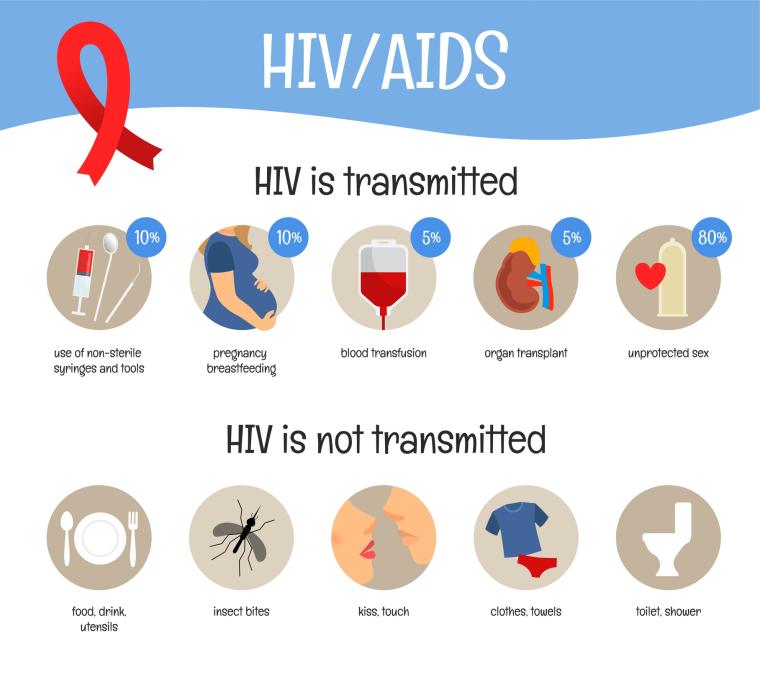
HIV is transmitted only when infected blood or certain body fluids enter another person’s bloodstream.
The main routes of transmission include:
- Unprotected sexual contact (without protective methods such as condoms)
- Sharing needles, syringes, or other injecting equipment
- Transmission from an untreated mother to her baby during pregnancy, childbirth, or breastfeeding
- Rarely, through unscreened blood transfusion
It is equally important to understand how HIV is not transmitted. Everyday interactions such as handshakes, sharing meals, telephones, toilets, hugging, coughing, swimming pools, or casual social contact do not spread the virus.
Why Testing Matters
Many people living with HIV are unaware of their infection. Testing is the only way to know one’s status—and in Iran, it is free and completely confidential.
Anyone can visit Behavioral Diseases Counseling Centers or access the nearest testing site through:
���� https://icdc.behdasht.gov.ir/vct
The national campaign “I Will Get Tested Too”, held in November–December 2025, aims to expand awareness, promote early diagnosis, and ensure equitable access to prevention and treatment services.
Treatment and Prevention
Modern antiretroviral therapy (ART) can reduce the amount of virus in the blood to undetectable levels, meaning the risk of transmission to others becomes nearly zero.
Effective prevention also includes:
- Consistent use of condoms during sexual contact
- Single-use and personal injection equipment
- Treatment of HIV-positive pregnant women to prevent mother-to-child transmission
A More Human Perspective
People living with HIV are integral members of our society. They can study, work, marry, and lead fulfilling lives.
Eliminating stigma and discrimination, safeguarding human rights, and ensuring equitable health services are essential pillars of successful HIV control.
Final Message
AIDS is not the end—it is a reminder that knowledge, compassion, and innovation can save lives.
With timely diagnosis and effective treatment, the circulation of the virus and its transmission to others can be drastically reduced.
By taking a simple test, we protect ourselves, our families, and our communities—and take one step closer to a world free of AIDS.