Prevalence of Dry Eye and Convergence Insufficiency Among Online Business Owners Investigated by Researchers at the Health Promotion Research Center

Interview with Dr. Atena Rafieipour on the study “Prevalence of Dry Eye and Convergence Insufficiency in Individuals Engaged in Online Businesses”
Dr. Atena Rafieipour, member of the Research Council of the Health Promotion Research Center and principal investigator of the study titled “Prevalence of Dry Eye and Convergence Insufficiency in Individuals Engaged in Online Businesses”, recently shared insights into this research project during an interview.
1. Thank you for joining us. Please introduce yourself and share a brief overview of your academic and professional background, as well as your involvement in this research.
In the name of God,
I am Dr. Atena Rafieipour, PhD in Occupational Health and a faculty member at the Department of Occupational Health, School of Public Health, Iran University of Medical Sciences. Since my postgraduate studies, I have been deeply committed to improving the health and well-being of workers. My research primarily focuses on occupational health and the factors influencing well-being in the workplace. I firmly believe that promoting workers’ health is directly linked to the health of the broader community, especially considering that over 80% of the global population spends the majority of their waking hours in work environments, as highlighted by the World Health Organization. In line with this belief, I have pursued problem-oriented research grounded in the emerging needs of evolving workspaces—particularly those associated with digital occupations.
2. What motivated you to pursue this research project, and who were your collaborators?
With the rapid expansion of digital professions, especially following the COVID-19 pandemic, we are witnessing a significant transformation in occupational patterns. The widespread availability of smartphones, high-speed internet, and the proliferation of social media platforms have facilitated the emergence of new forms of employment. While these digital professions—particularly in the realm of e-commerce—offer advantages such as accessibility, flexibility, and time efficiency, the occupational health of those engaged in them has often been overlooked. Many of these individuals are self-employed and lack access to structured training or health monitoring programs. This gap motivated us to assess visual health within this population, as continuous exposure to digital screens may increase the risk of conditions such as dry eye and convergence insufficiency.
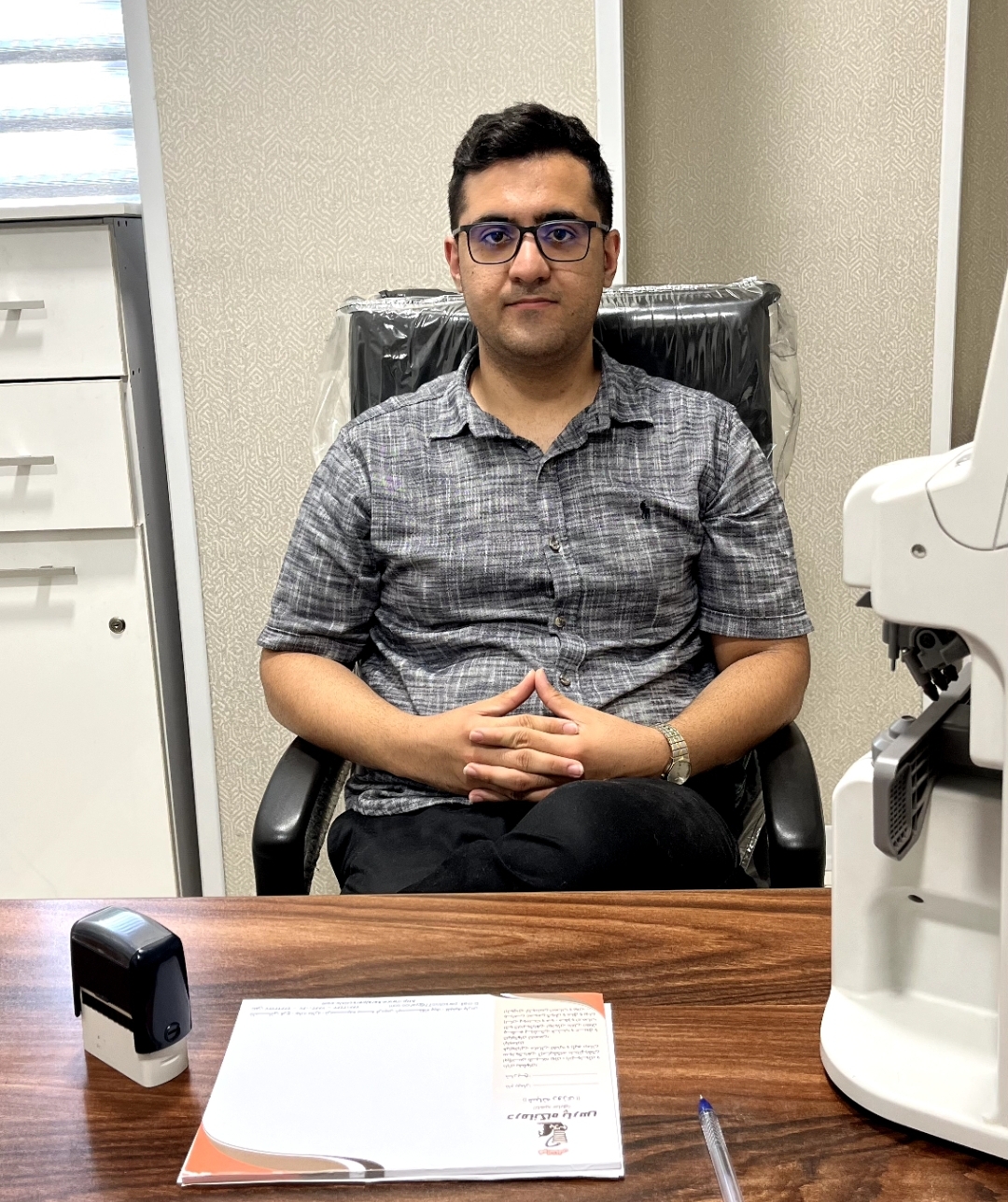
This study greatly benefited from the collaboration of Mr. Hamed Soltan-Dehghan, an optometrist, and Dr. Samaneh Hosseinzadeh, a faculty member in the Department of Biostatistics. The invaluable contributions of Mr. Soltan-Dehghan—an emerging scholar in the field of optometry—were particularly instrumental. His scientific rigor and exemplary research spirit played a significant role in shaping and advancing the study.
3. Please introduce your research and highlight its key features and innovations.
This study was designed to investigate the prevalence of two common ocular disorders—dry eye and convergence insufficiency—among individuals working in digital commerce. Given the distinctive characteristics of this occupational group, including high dependency on screens and the lack of fixed work hours due to self-employment, they may be at increased risk for ocular complications.
Previous studies have shown that prolonged screen time can lead to dry eye due to factors such as reduced blinking frequency and exposure to screen-emitted light. Furthermore, some recent findings suggest that convergence insufficiency may also be associated with excessive use of digital devices. In this study, we employed two validated tools—the Ocular Surface Disease Index (OSDI) and the Convergence Insufficiency Symptom Survey (CISS)—to assess symptoms related to these conditions.
What distinguishes this research is its specific focus on a newly emerging workforce: page administrators, online store owners, and digital entrepreneurs. Despite their growing presence, this population has rarely been examined in public health studies. Our findings revealed that, despite the relatively young average age of participants, the prevalence of these ocular conditions exceeded that reported in general population studies—underscoring the need for greater attention to occupational health in digital professions.
4. Has this research reached the implementation or dissemination stage?
Yes, the study has been successfully completed. Its findings have been submitted as a policy brief to the Knowledge Translation Office at Iran University of Medical Sciences, and the corresponding scientific article is currently under review for publication. We hope the results will contribute meaningfully to improving occupational health among digital workers.
5. How can this research help address public health challenges?
Occupational diseases significantly impact workforce productivity and healthcare costs. Preventive measures can enhance the resilience of health systems, reduce economic burdens, and improve quality of life for workers. The insights from this study can raise awareness among healthcare professionals, policymakers, and digital workers themselves about hidden visual health risks. Furthermore, simple and practical interventions could help reduce the incidence of these conditions—especially in younger age groups.
6. What are your expectations from research authorities in terms of support and development of similar initiatives, and what recommendations do you have?
We hope that this research will pave the way for further investigations in this area, particularly through the use of more precise tools and combined methodologies, such as clinical eye examinations. Achieving this goal requires financial, infrastructural, and institutional support from national research authorities. Additionally, we recommend that the results of such studies be formally communicated to occupational health policymakers to inform the development of targeted guidelines for digital workers. Forming interdisciplinary research teams and utilizing academic and national dissemination platforms can also play a key role in advancing this field.
7. Do you have any final remarks regarding your current or future projects?
Our research team aims to take the next steps toward developing mobile health (mHealth) applications tailored to digital professionals. These tools could provide practical and accessible eye care education through smartphones. We also plan to design awareness-raising packages specifically for online business owners. These initiatives are part of our broader vision to enhance occupational health in the digital era.